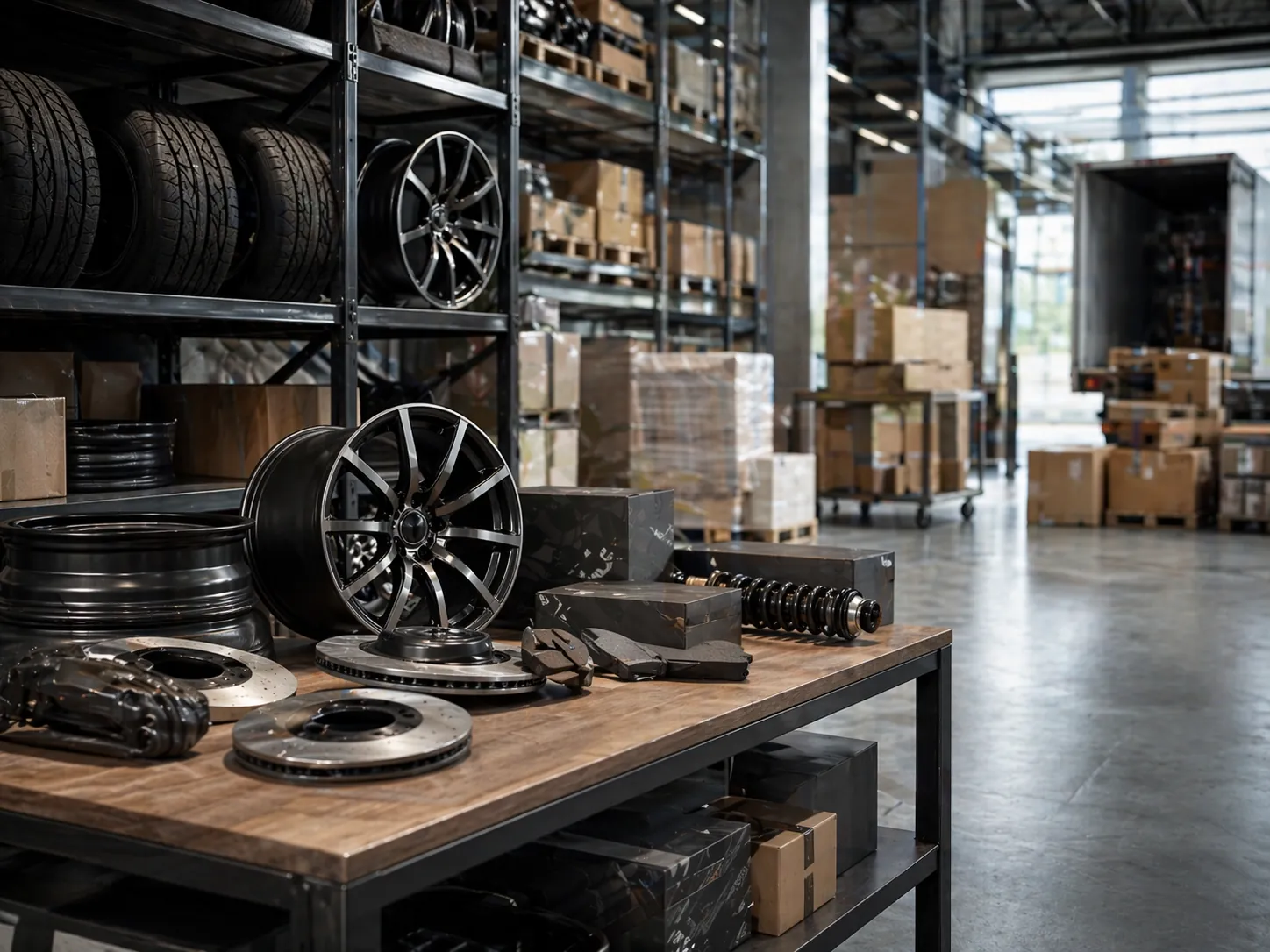
Automotive Ocean Freight Forwarder for OEM and Tier-1 Supply Chains
FCL, OOG, flat rack, and breakbulk on the auto lanes — paired with JIT lane engineering, bonded FTZ, and USMCA / Section 232 compliance. One NVOCC platform from supplier to plant.
Lanes we run for automotive
Yokohama to Long Beach in 14 days. Direct contracts on the corridors your cargo actually moves on.
Built for automotive
FCL, OOG, flat rack, breakbulk, JIT lane engineering, bonded FTZ.
JIT lane engineering
Buffer-stock programs, reserved weekly sailings, and same-day drayage so tier-1 and tier-2 parts arrive when the line calls for them.
OOG, flat rack, breakbulk
Engines, transmissions, pressed panels, and complete vehicles. Project cargo handling with engineering sign-off on every load.
Bonded FTZ warehousing
Foreign Trade Zone and bonded facilities near every major auto cluster. Duty is paid only on what gets released to the line.
Auto customs specialists
HTS classification for auto parts, USMCA certificates, EPA compliance, Section 232 steel/aluminum, and Section 301 China mitigation.
Rail and drayage
Direct rail moves into Detroit, Greenville, San Antonio, and other auto hubs. Same-day chassis and drayage for emergency line-side delivery.
Vehicle and parts consolidation
Multi-supplier LCL consolidation at origin and de-consolidation at destination FTZ. One container per program, not one per supplier.
When the line can't wait
Automotive freight runs on sequence, not ETAs. Every container is plotted against your production calendar — from the tier-2 supplier to the line-side dock.
Reserved weekly sailings, buffer-stock at FTZ near every major plant, and same-day drayage — escalated the moment any leg threatens the line-side date.
Run your automotive POs from one screen
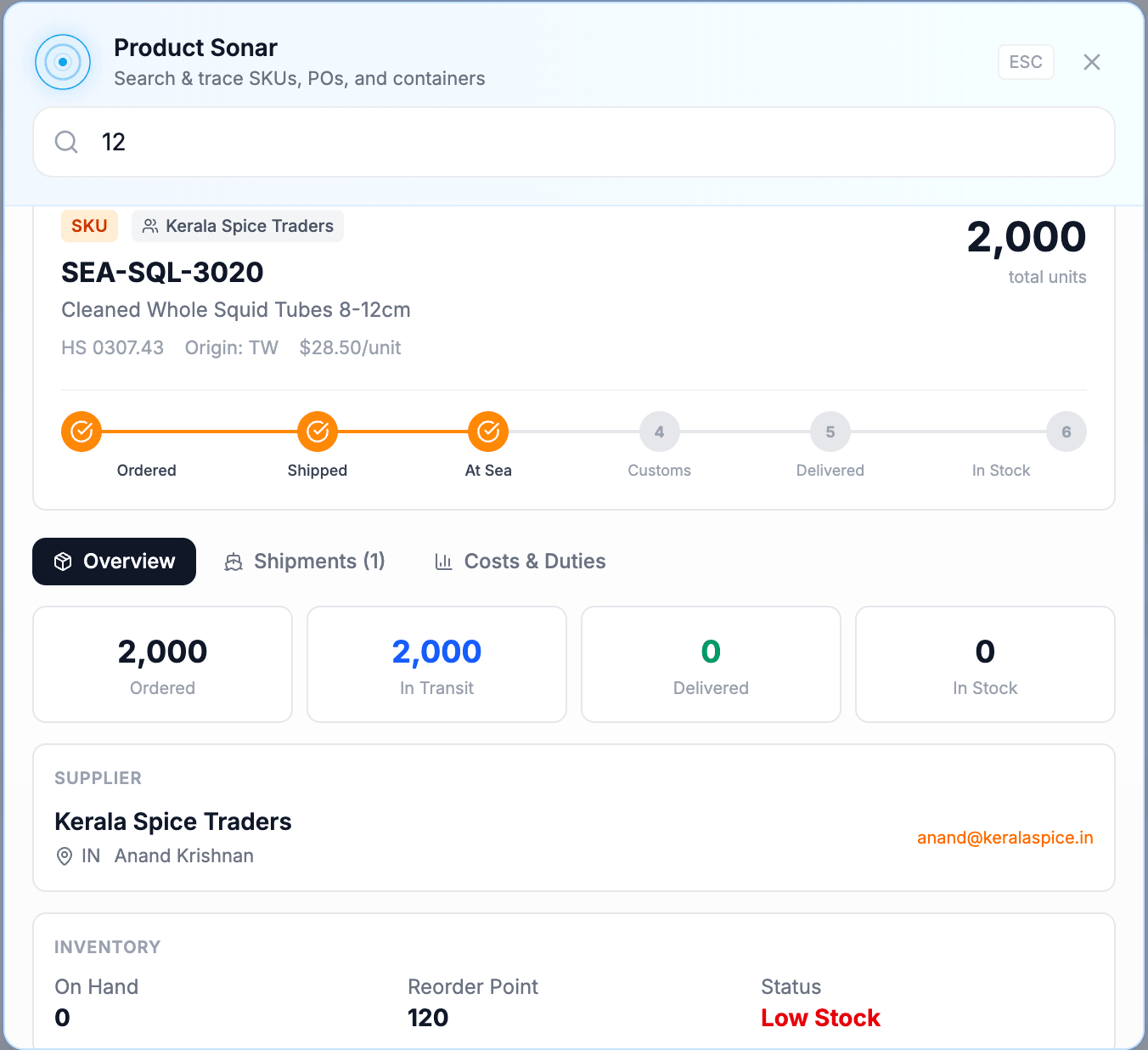
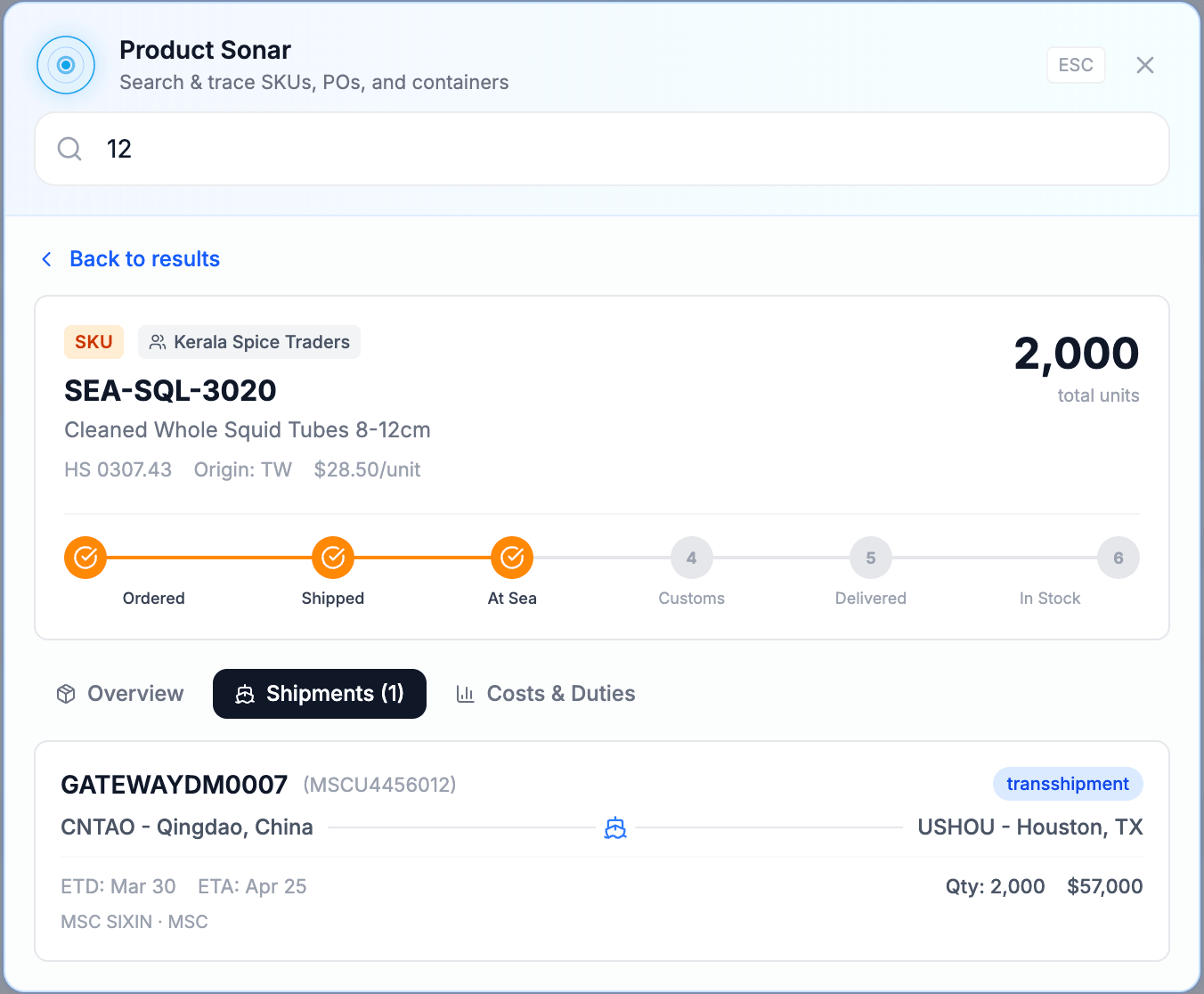
Product Sonar tracks the lifecycle of every PO — search by SKU, see stock counts, trace shipment status, and check duty exposure live.
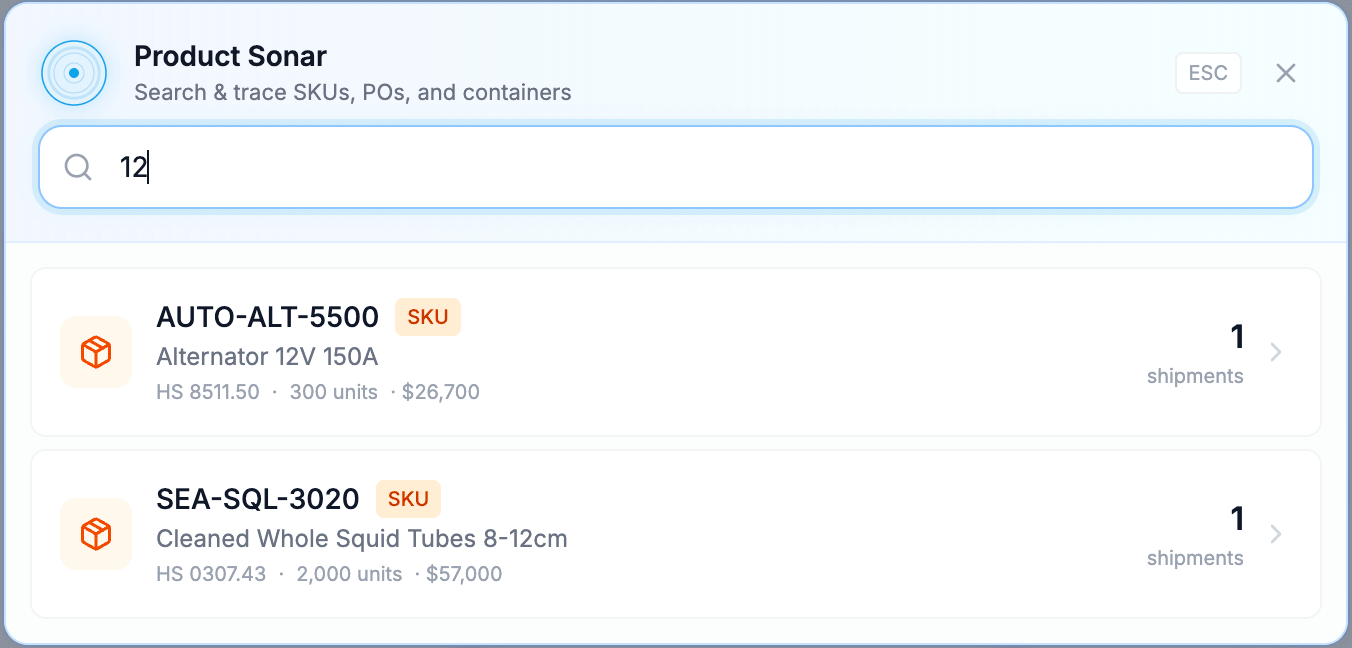
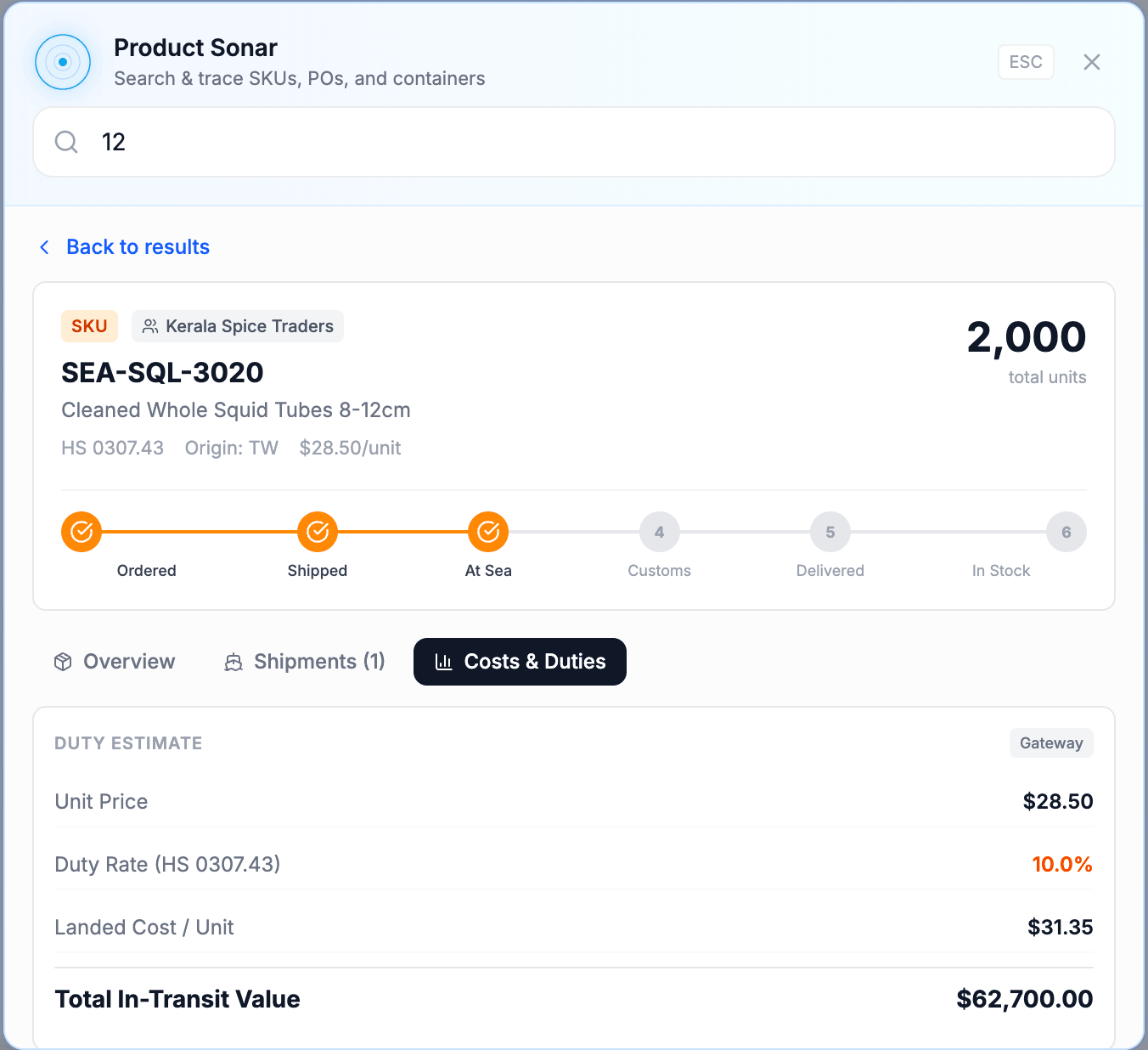
- SearchFind any SKU in secondsSearch your full catalog by SKU, HS code, supplier, factory, or origin country. One bar, no spreadsheets.
- StockLive stock counts per SKUHow many you ordered, how many are on the water, how many landed. One number per SKU at a glance.
- TracePO lifecycle, end to endTrace every PO from cut to delivery. Container, vessel, customs, FTZ, final-mile — every stage timestamped.
- DutiesLive duty exposureMFN, Section 301, AD/CVD per SKU. See landed cost before the container leaves origin.
- SearchFind any SKU in secondsSearch your full catalog by SKU, HS code, supplier, factory, or origin country. One bar, no spreadsheets.
- StockLive stock counts per SKUHow many you ordered, how many are on the water, how many landed. One number per SKU at a glance.
- TracePO lifecycle, end to endTrace every PO from cut to delivery. Container, vessel, customs, FTZ, final-mile — every stage timestamped.
- DutiesLive duty exposureMFN, Section 301, AD/CVD per SKU. See landed cost before the container leaves origin.
Just-in-time freight, engineered to your production schedule
Most ocean forwarders book a vessel and email the ETA. That is not enough for automotive — your line schedule was set six months ago, and a missed container can shut a plant down at $50,000 an hour.
Gateway runs JIT lane engineering as a discipline: buffer-stock programs, reserved weekly sailings, same-day drayage on demand, and proactive escalation the moment any leg of the journey threatens the line-side date.
Plant managers, supply planners, and tier-1 suppliers all watch the same Gateway dashboard, with every container plotted against your production calendar. No late-night phone calls. No surprise rolls.
Connect your plant systems — Gateway integrates
Plug Gateway into the ERPs your OEM and supplier base already run on. POs, ASNs, ETAs, and customs status stay in sync with your production schedule.





The difference on your freight
We live by the production schedule
JIT is not marketing copy. Gateway books, tracks, and escalates to the minute your plant manager needs.
Engineered project loads
Flat racks, breakbulk, and special equipment are planned at quote, not scrambled for at booking.
USMCA, tariff, and compliance ready
Section 232 aluminum and steel, Section 301 China, IRA battery credits. Built into every quote.
Common questions
What is an automotive ocean freight forwarder?
Can Gateway handle just-in-time automotive parts shipments?
Does Gateway handle OOG, flat rack, and breakbulk for engines and panels?


Ready to move automotive with Gateway?
Get a rate in 24 hours or talk to a automotive specialist about your next shipment.